Mullein (Verbascum thapsus)
Growing naturally here on our North Georgia property, nestled in the foothills of the Appalachian Mountains. Wildcrafted with intention, our mullein is sustainably harvested from healthy first-year leaves and flowers growing naturally on this land, honoring the plant, the earth, and the relationship between them. Hand foraged and carefully dried to preserve its natural quality. Mullein has been valued as a medicinal plant for over 2,000 years. Traditionally used by European herbalists, Indigenous peoples, and folk healers, it is best known for supporting the respiratory system and soothing irritated tissues.
Every plant has a story. Mullein teaches patience, resilience, and adaptability — growing where others may not. We harvest with gratitude, honoring the relationship between people, plants, and the earth.
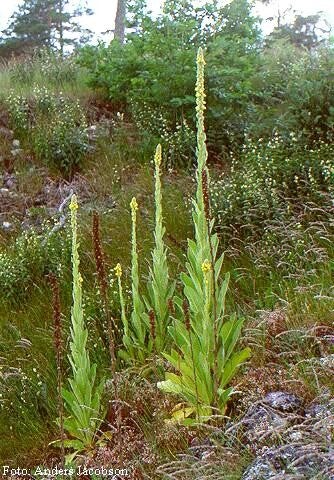
Wild mulllein growing happily on our hillside
Only the first year leaves of mullein (Verbascum thapsus) are harvested as during this time, the plant stores its energy and medicinal compounds in the roots and foliage before redirecting all its resources into the large second year flowering stalk.

Mullein leaves drying.
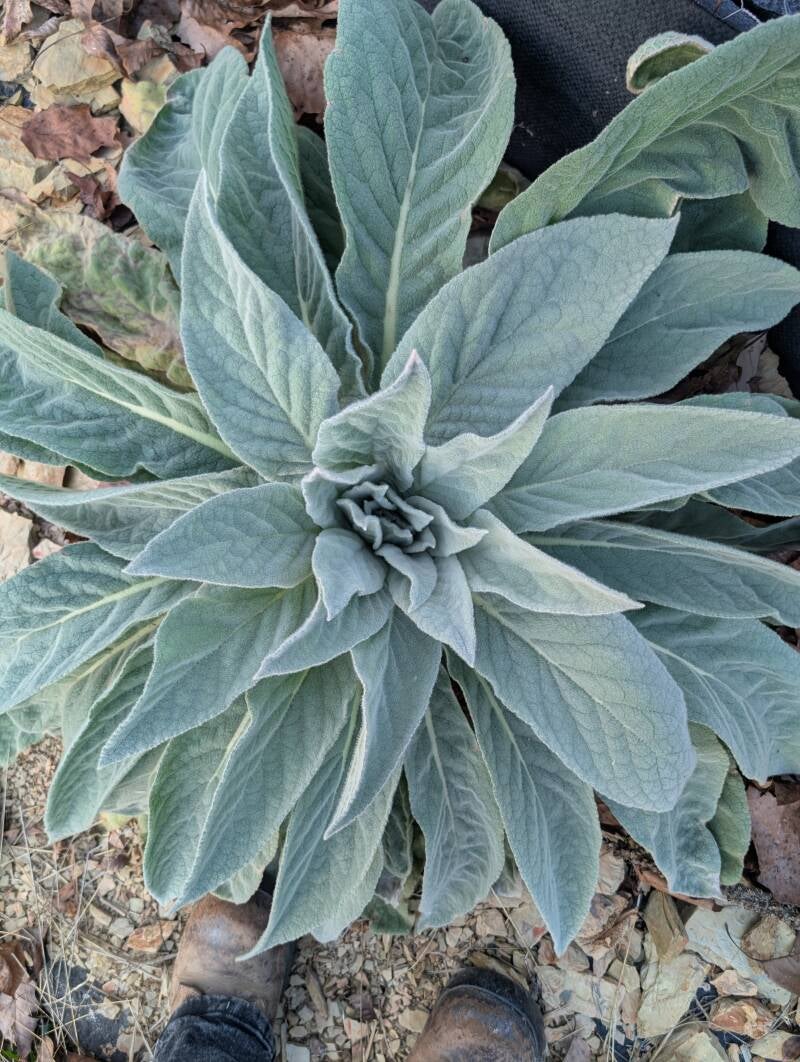
Mullein -first year rosette
🌿 About the Plant
Mullein (Verbascum thapsus)
A biennial plant known for its tall golden flower stalk and soft, velvety leaves, mullein has been treasured by herbalists for centuries. Often called the “lung leaf” or “candlewick plant,” it thrives in open fields, meadows, and disturbed soils, offering its gifts to the landscape.
Leaf Tea
Traditionally prepared as a soothing herbal infusion. Because mullein leaves contain tiny hairs, tea should always be strained well before drinking.
Flower Oil
Flowers infused into oil for external herbal preparations.
Poultice
Historically used externally as a plant compress.
Traditional Uses Across Cultures
Mullein (Verbascum thapsus) has been cherished as a healing plant for centuries across Europe, the Mediterranean, Turkey, and North America.
European Herbal Traditions
For generations, European herbalists used mullein as a gentle respiratory ally. Leaves and flowers were traditionally prepared as teas, syrups, and infused oils to support:
• Coughs and bronchial irritation
• Hoarseness and sore throats
• Seasonal respiratory discomfort
• Mucus congestion
Mullein flower oil became especially valued in European folk medicine for soothing ear discomfort.
Turkish Herbal Medicine
In Turkey, where many species of Verbascum grow, mullein has a long history in traditional healing. Herbal preparations were used for:
• Respiratory complaints, including cough and bronchitis
• Inflammation and discomfort
• Skin conditions and wounds
• Rheumatic aches and pains
Indigenous and Folk Uses in North America
After becoming established in North America, mullein was adopted into many traditional herbal practices. Leaves and roots were used in various preparations for:
• Supporting lung and throat health
• Herbal poultices for skin and swollen areas
• Traditional wellness practices for the body and spirit
Across cultures, mullein has earned its reputation as a soft, soothing plant — often called a “lung herb” — valued for its gentle nature and versatility.
What Modern Research Shows
Mullein contains naturally occurring flavonoids, saponins, mucilage, and iridoid glycosides that have demonstrated:
- Anti-inflammatory activity
- Antioxidant properties
- Mild antimicrobial effects
- Soothing support for irritated respiratory tissues
- Gentle expectorant action that may help loosen mucus
While laboratory studies support many of these traditional uses, human clinical research remains limited. Mullein is considered a supportive herb rather than a cure for respiratory disease.